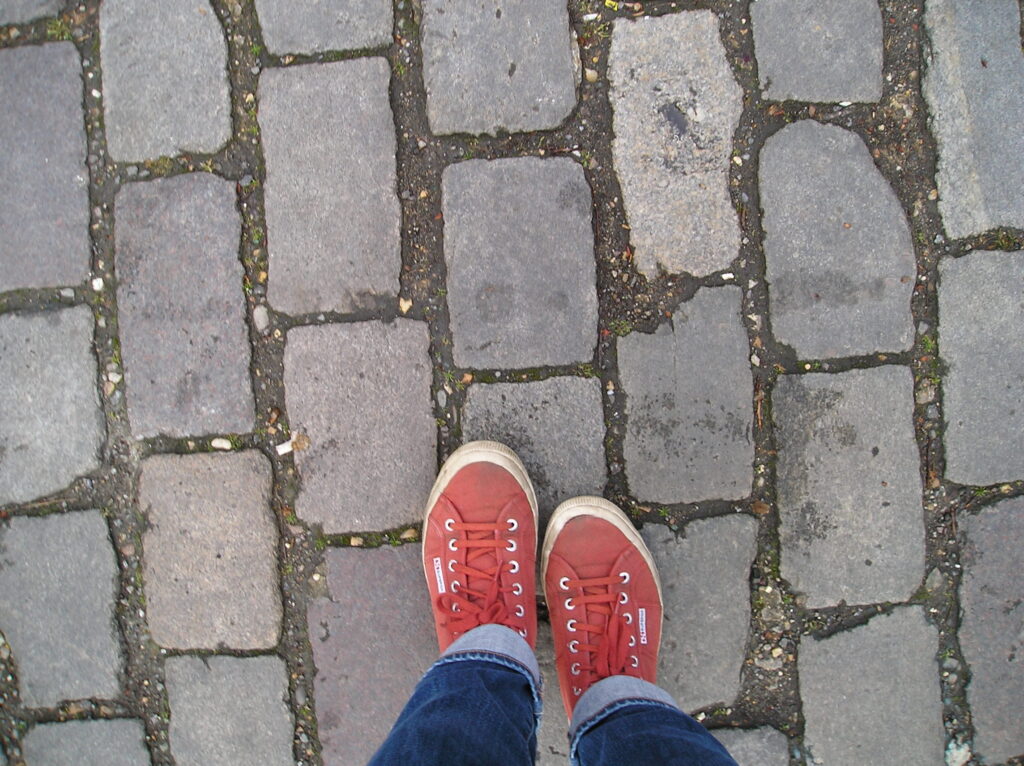
Mobility may sound like freedom – the right to move between places, the right to explore different spaces…
But forced mobility – or forced immobility – is very different; and it is common in situations of violence and abuse. An abuser may try to constrain his partner’s movement – and use methods of surveillance. And the only means of escape may be a relocation – usually of women and children.
Women are often kept isolated in the abuse – but then still very isolated if they go to a new unknown place – leaving behind friends, work colleagues, family, and everything they know. Just to be safe. Just to survive.
Meeting other women who have been through similar experiences can be a revelation – and powerful in making sense of what they have been through. Helping women – and their children – to begin to settle, and ‘move on’.
Participatory creative groupwork with women who had relocated due to domestic violence in this research has provided hundreds of images which can be seen in the book and the card game.
The images and captions provide women’s insights about the possibility of empowerment, the communication of creativity, and the productiveness of groupwork and peer support. This is highlighted in a new publication – the Encyclopedia of Mobilities – including an entry about the participatory groupwork in this research.